Porto wears its history on its walls in blue and white. Here is how to read the tile panels in São Bento station and the tiled churches nearby, and where to see them without the crowds.
Tiles that tell stories
Azulejos arrived in Portugal centuries ago and never left. In Porto they cover church walls, shop fronts, stairwells and whole streets of houses, partly for beauty and partly because glazed tile shrugs off the Atlantic rain far better than paint. Once you start noticing them, you see tiles on almost every corner.
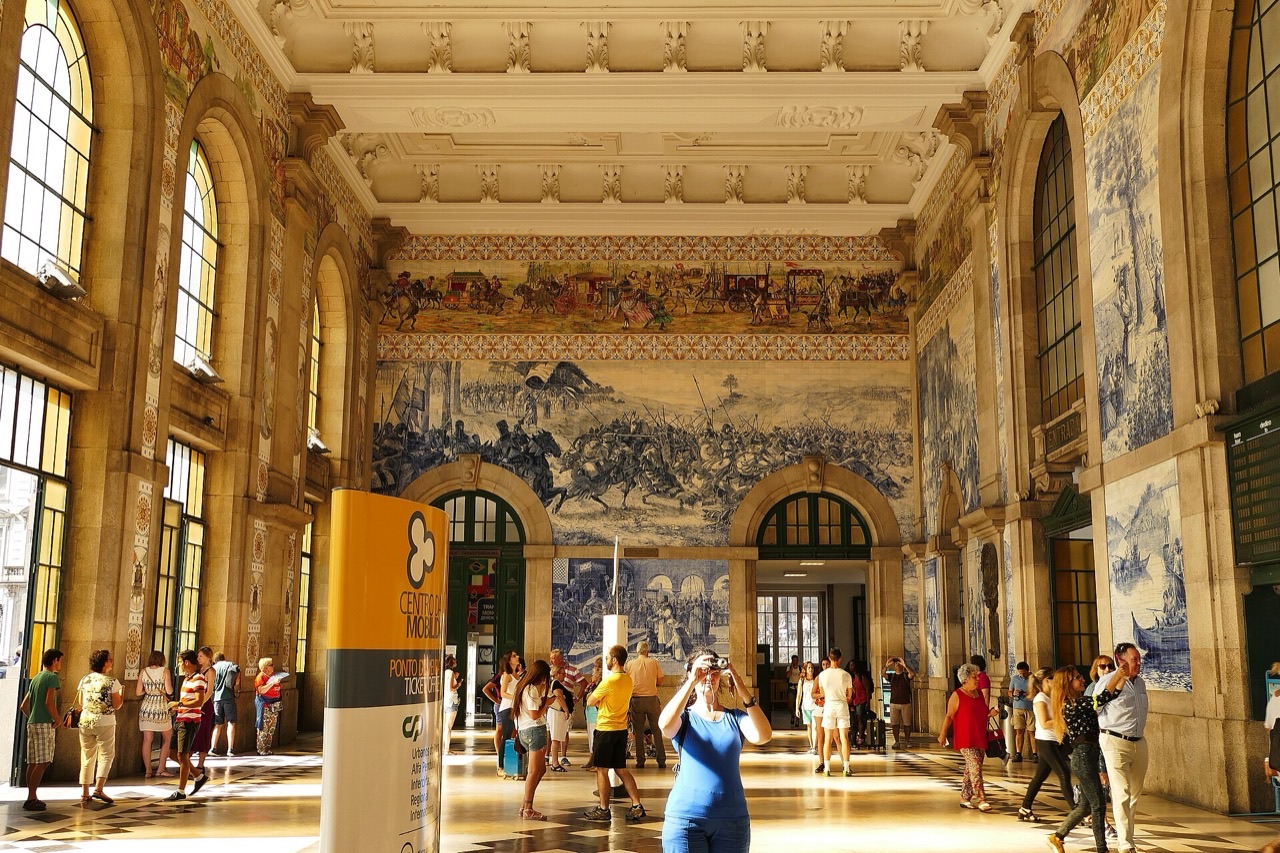
The large panels are picture books. They show battles, royal journeys, saints and the everyday work of the countryside, painted by hand on hundreds of square tiles and fitted together like a puzzle. Standing back is the only way to read them, so give yourself a few steps of room.
São Bento station: the hall to see first
The entrance hall of São Bento station, ten minutes' walk uphill from our door, holds some of the most famous tile panels in the country. Around twenty thousand tiles cover the walls with scenes from Portuguese history, framed by a band of coloured tiles near the ceiling that shows the story of transport.
Trains still run from the platforms behind, including the line up the Douro Valley, so the hall is a working station, not a museum. Entry is free. Come before nine or after six and you can stand in the middle of the floor and turn slowly without stepping into anyone's photograph.
| Where | What you see | Best time |
|---|---|---|
| São Bento station hall | History panels, transport frieze | Before 9:00 or after 18:00 |
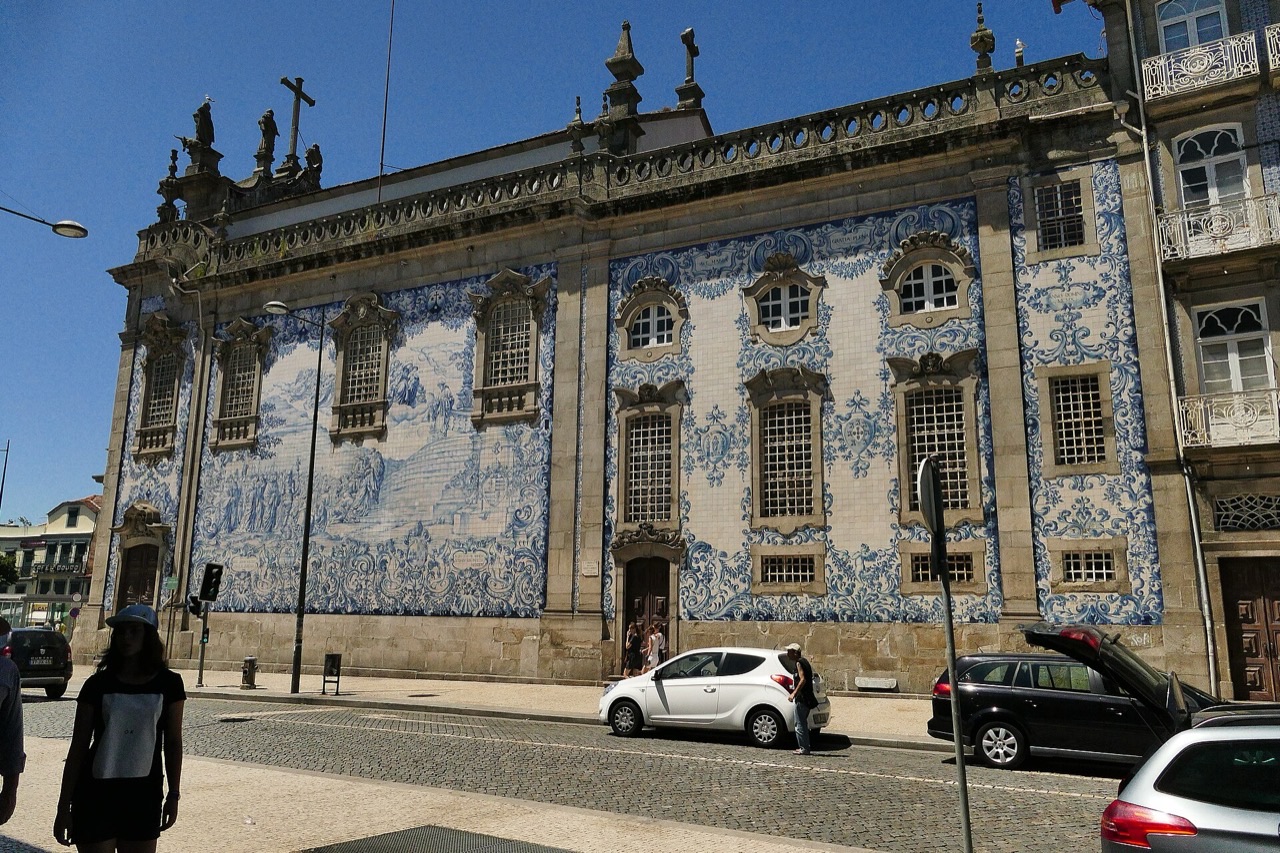
| Chapel of Souls | Saints' lives on two outer walls | Late afternoon sun |
| Carmo church side wall | One huge tiled street front | Mid-morning |
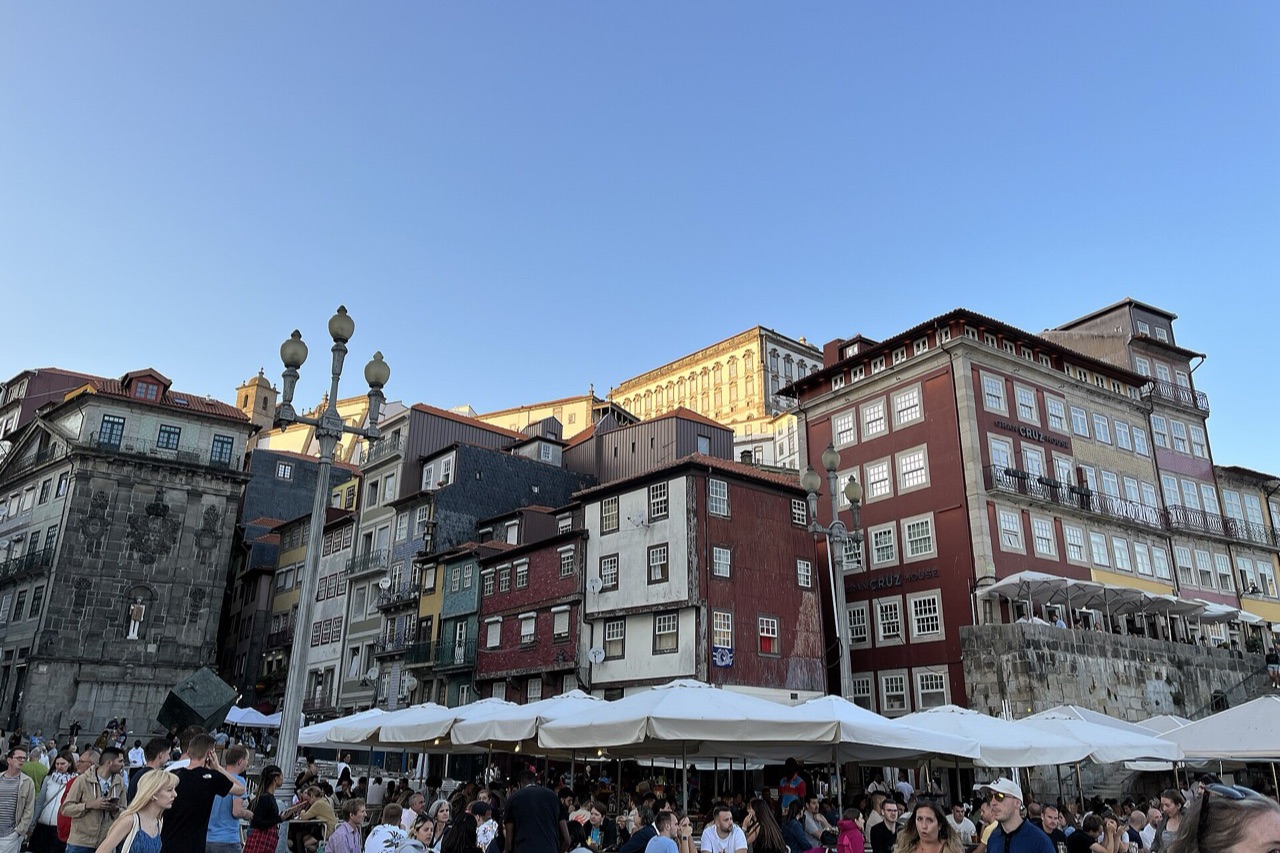
| Ribeira house fronts | Patterned factory tiles | Any time, look up |
The tiled churches nearby
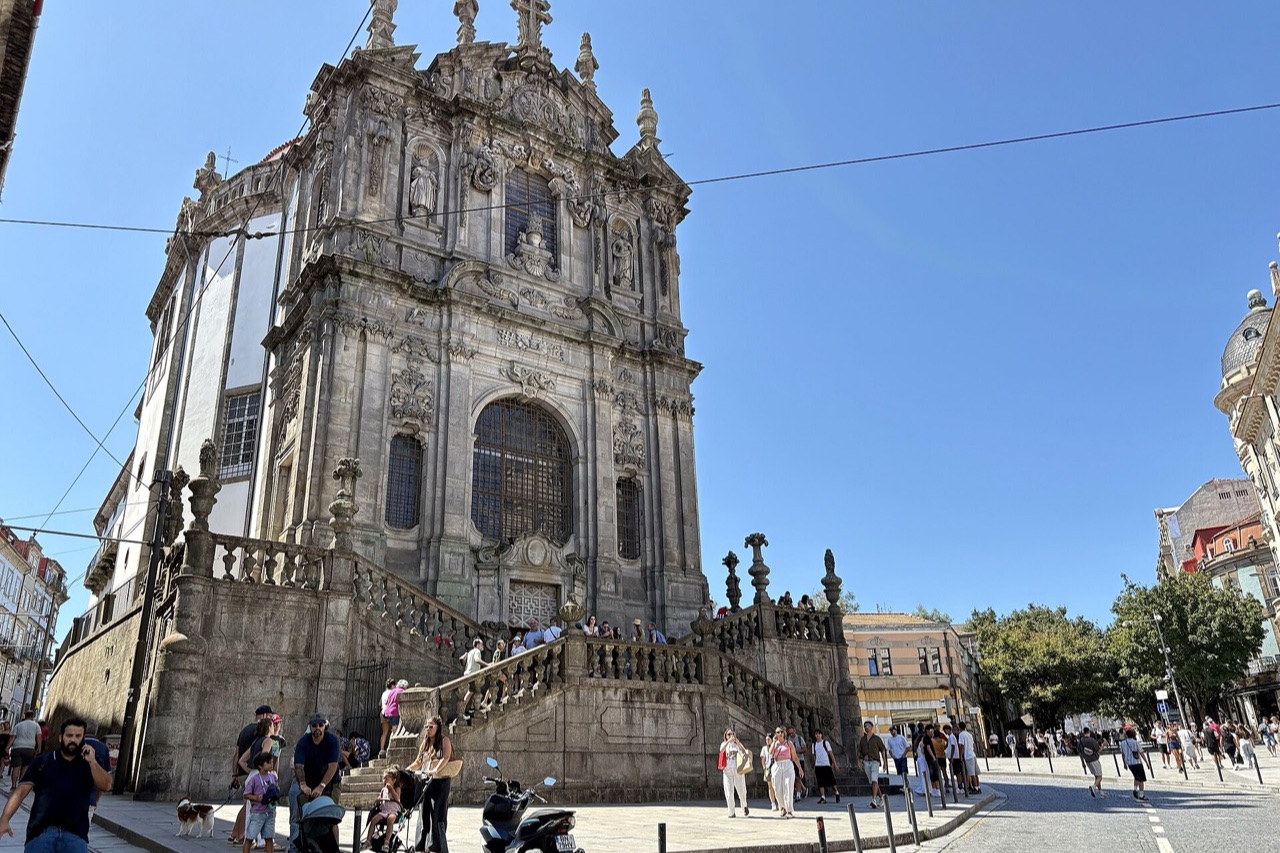
Two short walks from the station take you to the city's best-known tiled church walls. The Chapel of Souls on Rua de Santa Catarina is covered on two sides in blue-and-white scenes from the lives of saints, and the side wall of the Carmo church near the university does the same over an entire street front.
Inside, many churches swap tiles for gilded wood carving, which can be startling after the cool blue outside. Dress modestly, keep voices low during services, and remember that photographs are welcome in most churches but not always at the altar.
- Read from a distance: panels are designed to be seen from across a street or hall.
- Look for the frieze: the band near the ceiling often tells a second story.
- Check the blues: hand-painted tiles vary in shade, factory tiles repeat exactly.
- Leave them be: never touch or remove tiles, even ones that look loose.
Old tiles, new tiles and how to tell
Hand-painted tiles show tiny variations: brushstrokes, slightly uneven edges and blues that vary from panel to panel. Factory tiles from the late nineteenth century are crisper and repeat a pattern perfectly, which is why whole house fronts in the Ribeira look like fabric.
Please never touch or prise at a loose tile, however tempting. Stolen tiles are a real problem in the city, and many shops sell new hand-painted pieces made in local workshops. Ask our concierge for a small studio where you can paint a tile of your own.
“Guests come to Porto for the river and the port, then spend an hour in a train station looking at the walls. I always tell them to leave time for that.”
Key takeaways
- São Bento station's tiled hall is free and best before 9:00 or after 18:00.
- The Chapel of Souls and the Carmo church wall are short walks from the station.
- Never touch loose tiles; buy new hand-painted pieces from local workshops instead.
Would you like a tile walk planned around your stay? Write to our concierge and we will map the route for you.