Guests often ask about our sheets before they ask about breakfast. Here is where our bed linen comes from, why we chose linen and cotton woven in the north of Portugal, and how we care for it.
Woven a few hours up the road
The north of Portugal has woven textiles for centuries, and the river valleys above Porto are still full of small mills. Our sheets come from a family weaving company in the Minho, about ninety minutes north, that we have worked with since the guesthouse opened in 1994. We visit the mill every winter.
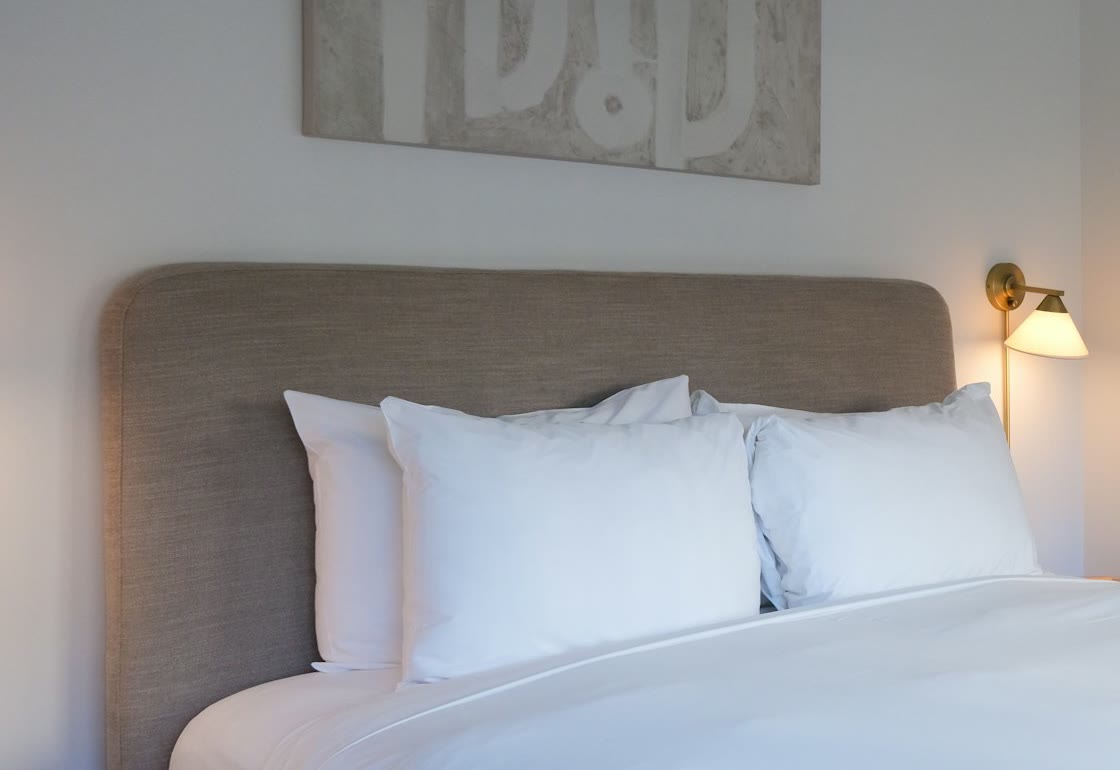
We use two cloths. In summer the beds are dressed in washed linen, which breathes, stays cool and softens with every wash. From November to March we switch to a heavier long-staple cotton percale that holds warmth on the damp Atlantic nights when the river fog comes up to the windows.
“We could save money on sheets, but sleep is the one thing every guest takes home with them. It is the last place we would cut corners.”
Why linen and cotton, not blends
Many hotels choose polyester blends because they iron fast and last longer in industrial laundries. We tried them once and guests noticed straight away: the sheets felt warm and slippery and held odours. Natural fibres cost more and need more care, but they are what a good night's sleep in an old granite house needs.
Linen also suits the building. Our walls are thick and the rooms stay cool, but summer afternoons can be humid by the river. Linen absorbs moisture and dries quickly, so the bed feels fresh at night even without air conditioning on full.
- Summer linen: washed linen from May to October, cool and breathable on warm nights.
- Winter percale: long-staple cotton from November to March, warmer and smoother.
- Wool blankets: folded at the foot of every bed for the coldest Atlantic nights.
- Pillow menu: feather or firm fibre pillows, swapped on request at reception.
How we wash and dry it
Our sheets are washed at a small laundry in the city that uses lower temperatures and mild detergent, then dried in a covered courtyard whenever the weather allows. On wet winter days they go into efficient dryers on a low setting. Every piece is checked by hand and mended or retired when it thins.
A set of our linen lasts around four years. Retired sheets are cut into cloths for the spa and the kitchen, and the last scraps go to a local school for art classes. Nothing leaves the house as waste if we can help it.
- Wash linen at 40 °C with a mild detergent and no fabric softener.
- Shake each piece hard before drying to open the fibres.
- Dry outdoors in shade or on a low tumble setting.
- Fold while still slightly damp, or simply put the sheets straight back on the bed.
- Rotate two sets so each rests between washes.
Taking care of linen at home
Guests who fall in love with the beds often ask where to buy the same sheets. The mill sells a small range directly, and reception can give you the details. The more useful advice is how to look after linen, because good care matters more than price.
Wash it cool, skip the softener and dry it in the air when you can. Do not worry about creases; they are part of the cloth, and they relax after one night. Treated this way, linen gets better every year instead of wearing out.
Key takeaways
- Our sheets are woven by a family mill in the north of Portugal.
- Beds are dressed in linen in summer and cotton percale in winter.
- Wash linen cool, skip softener and let it dry in the air.
Want to try the beds for yourself? Choose your room and ask for your favourite pillow when you book.