Ninety seconds of drone footage explain Porto better than any map. Our head concierge watches it with guests on their first evening and points out the quay, the bridge, the hills and where our house sits.
What the film shows
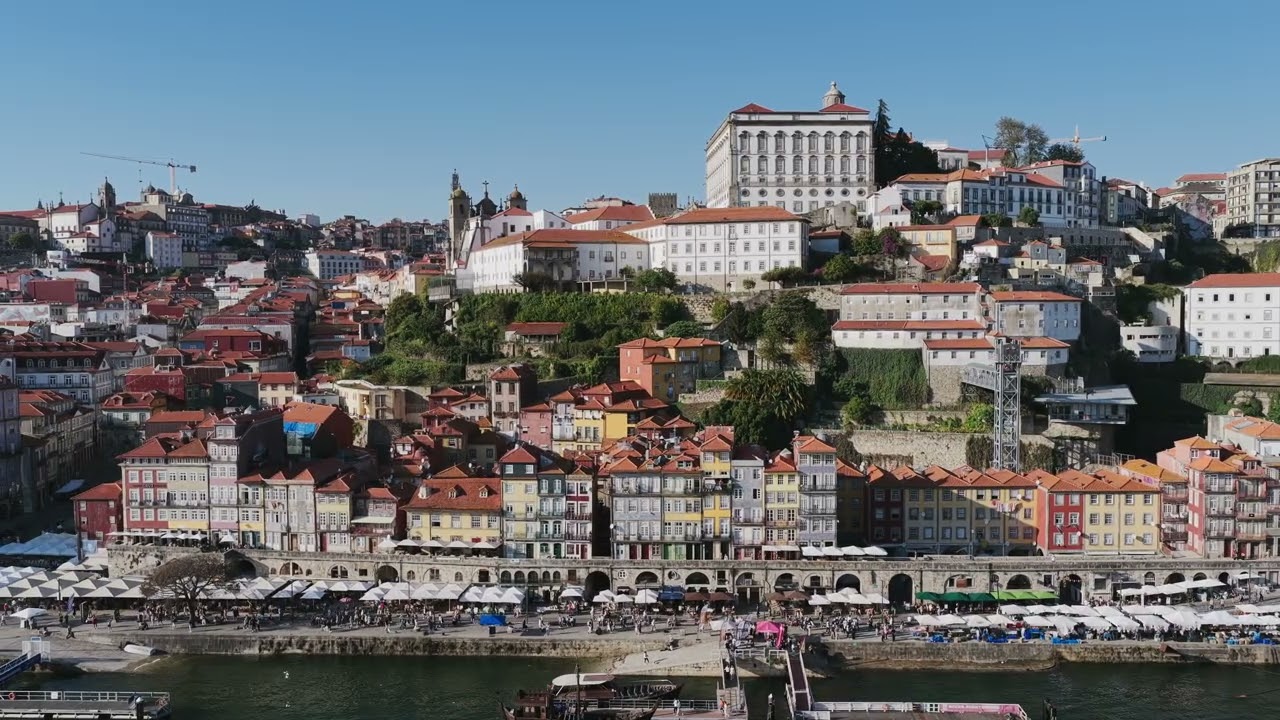
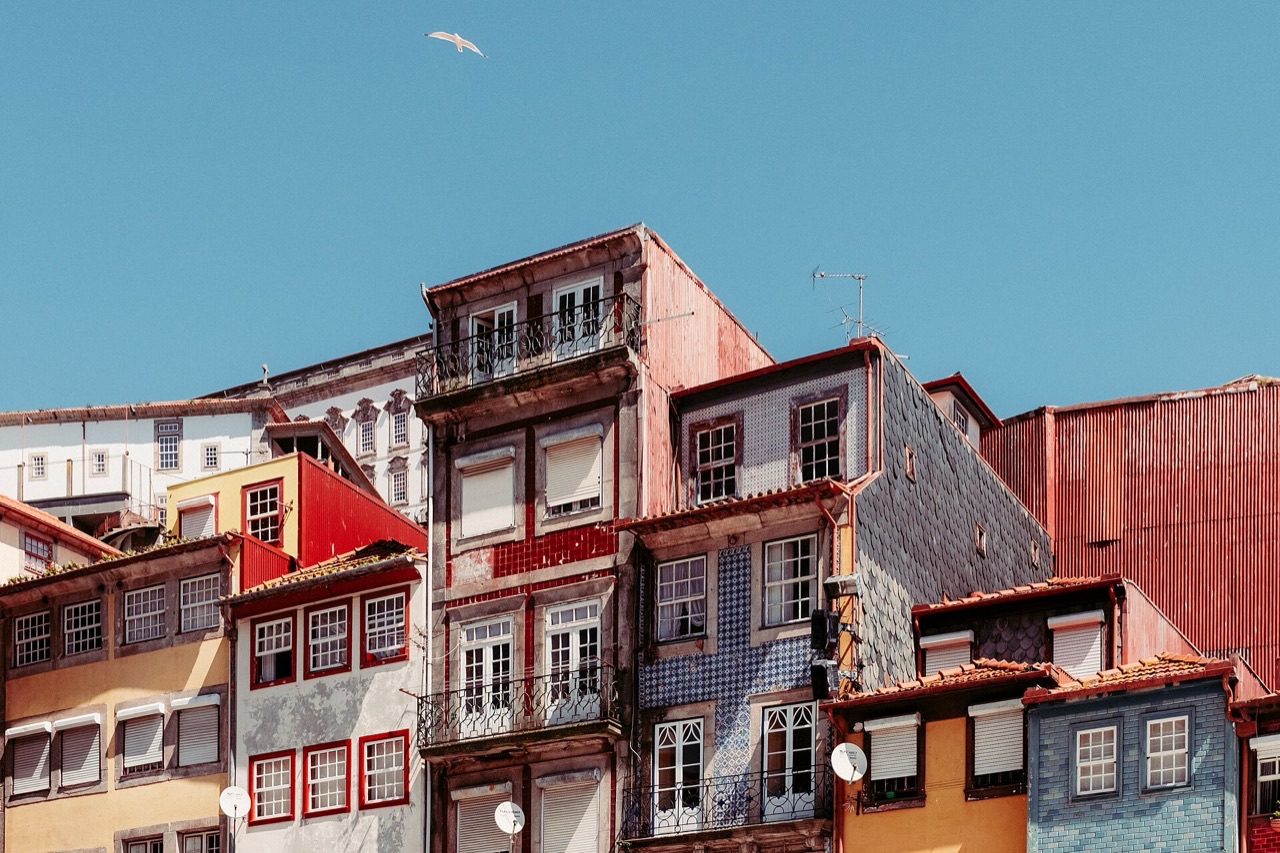
The camera starts low over the Douro and climbs slowly towards the Ribeira, the oldest stretch of the riverfront. Tall, narrow houses in red, ochre, blue and white stand shoulder to shoulder, their balconies hung with washing, their ground floors given over to cafés and small restaurants that spill onto the quay.
Above them the city climbs in terraces. On the hill to the right sits the bishop's palace, with the cathedral just behind it, and between the two runs a maze of stairways that look impossible from the water. It is the clearest picture you will get of why Porto is a walking city with strong calves.
Reading the river from the air
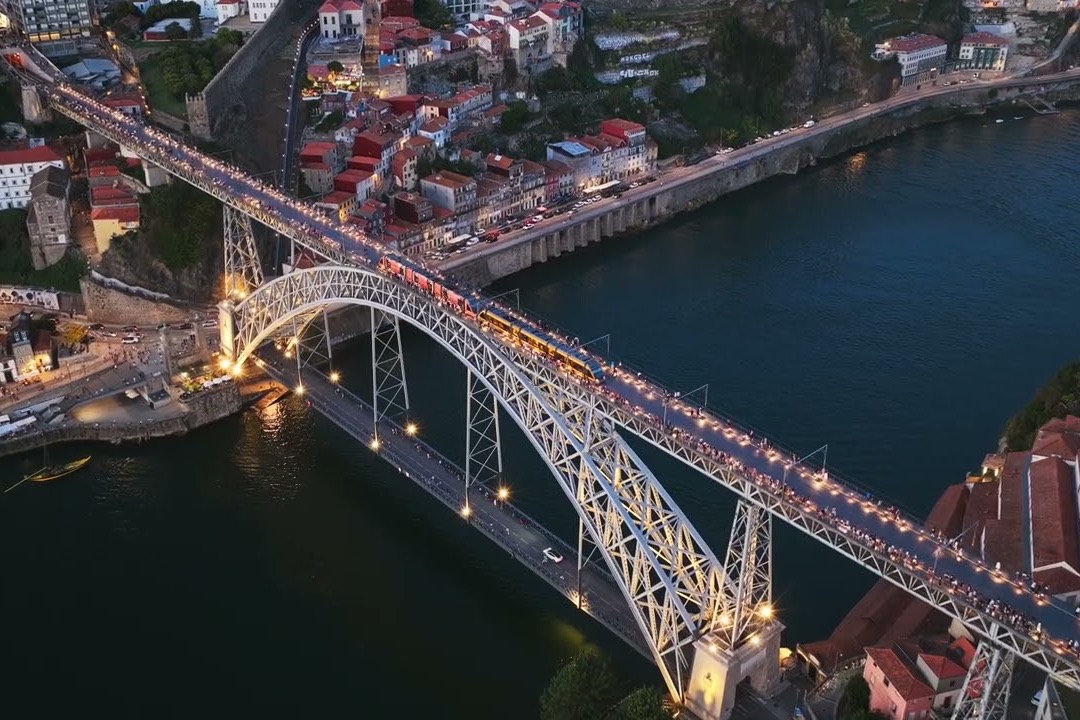
The Douro is the line everything else hangs on. On the north bank is Porto, on the south bank Vila Nova de Gaia, where the port wine lodges keep their barrels in long, low warehouses with their names painted on the roofs. The Dom Luís I bridge stitches the two together on two levels: a road and footpath below, the metro and a high walkway on top.
Our house is a few minutes west of the frame, on the same bank as the Ribeira. When you leave the gate and turn left along the river you are walking into the opening shot of this film, which is why we suggest watching it before your first evening out.
- The Ribeira quay: the riverfront row of houses and cafés, best early and after dark.
- Dom Luís I bridge: two decks of iron across the gorge, walkable on both levels.
- Vila Nova de Gaia: the south bank, home of the port lodges and the best view back.
- Cathedral hill: the oldest part of the city, with the bishop's palace on its edge.
Where to see the same view yourself
You do not need a drone. The city's hills and the bridge deck give you most of these angles for free, and each one is better at a particular hour. Morning light falls on the Gaia side; the Ribeira glows in the late afternoon, when the sun drops down the river towards the Atlantic.
Wear shoes with grip. Granite cobbles are polished smooth by centuries of feet and turn slippery after rain, and most viewpoints are reached by steep stairs rather than gentle slopes. Allow twice as long as the map suggests and stop often; the stops are the point.
| Viewpoint | Where | Best time | What you see |
|---|---|---|---|
| Top deck of the bridge | Dom Luís I, upper level | 8:00–10:00 | The whole river bend and both banks |
| Hilltop garden | Gaia side, above the bridge | One hour before sunset | The Ribeira lit gold across the water |
| Cathedral terrace | Cathedral square | 16:00–18:00 | Roofs falling to the river |
| Our terrace | PX Stay Riverside | 7:00–8:00 | Rowers and quiet water at breakfast |
Planning your first walk
We usually suggest a loop: along the quay to the bridge, across the lower deck to Gaia for a look back at the Ribeira, up to the gardens on the hill, then over the top deck and down through the cathedral quarter. It takes about two hours at an easy pace, longer if a port lodge tempts you in.
Ask at the desk the evening before and we will mark the loop on a paper map, note which stairways are gentlest and tell you when the top deck is quiet. Tram 1 stops near the house if your legs prefer the ride home along the river.
“Guests who watch the film before their first walk stop asking me for directions. They see the river, the bridge and the hills, and suddenly the whole city makes sense.”
Key takeaways
- Watch the film once before your first walk: the river and bridge explain the city.
- The best free viewpoints are the bridge's top deck and the hilltop garden in Gaia.
- Ask the desk for a marked loop map and wear shoes with grip for the cobbles.
Want a room with its own river view? See our rooms and suites, or ask the concierge to plan your first walk.