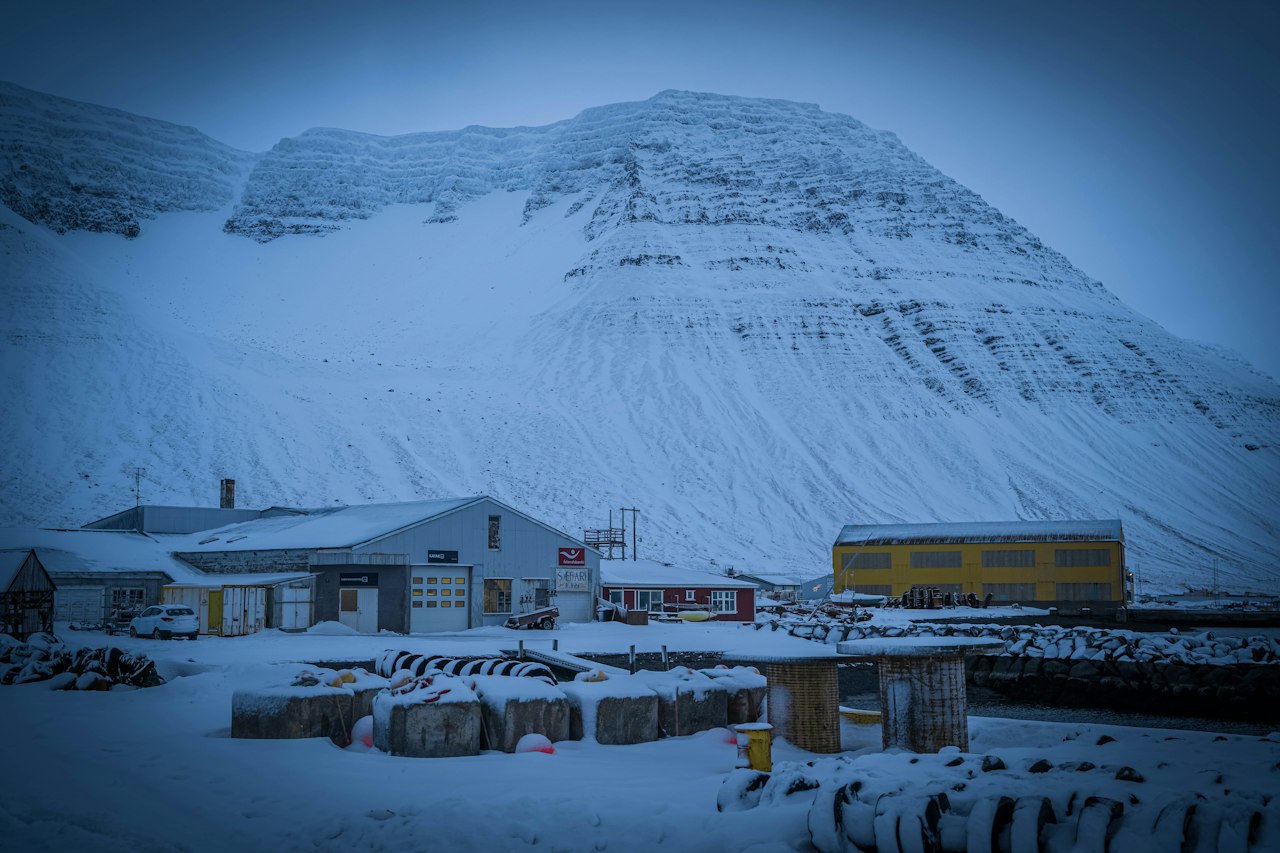

For two minutes in August, a remote village on Iceland's western fjords was the most sought-after place on the planet. Three months later, the sheep have got it back.
Getting there
It takes two flights, a small boat and a good deal of waiting for someone who may or may not have a key. By the time you get there, you have been travelling for almost two days and have completely forgotten what you were hoping to find. This is usually the right state in which to arrive.
The whole world came for two minutes, and then they all left the mountains.
The middle of nowhere
After a few days the sense of remoteness begins to change. The absence of signal stops being an inconvenience and becomes more like a change of air pressure. You start to get up with the light. You begin to know the name of the man who brings the bread and the state of his knee.
Coming home
Long journeys have become more considered in recent years. Travellers are taking fewer trips, staying far longer and asking better questions about where their money goes. Community-owned lodges and locally guided routes have grown considerably, and in the best of them, the visitor is plainly the one being taught.
Coming home is the odd part. The supermarket seems too bright, and everyone appears to be in a tremendous hurry to get to somewhere that looks much the same as here. It wears off, regrettably, in about a week. Until then, you carry around a bit of quiet you did not have before.