A documentary crew returned to the same glacier every month for a year.
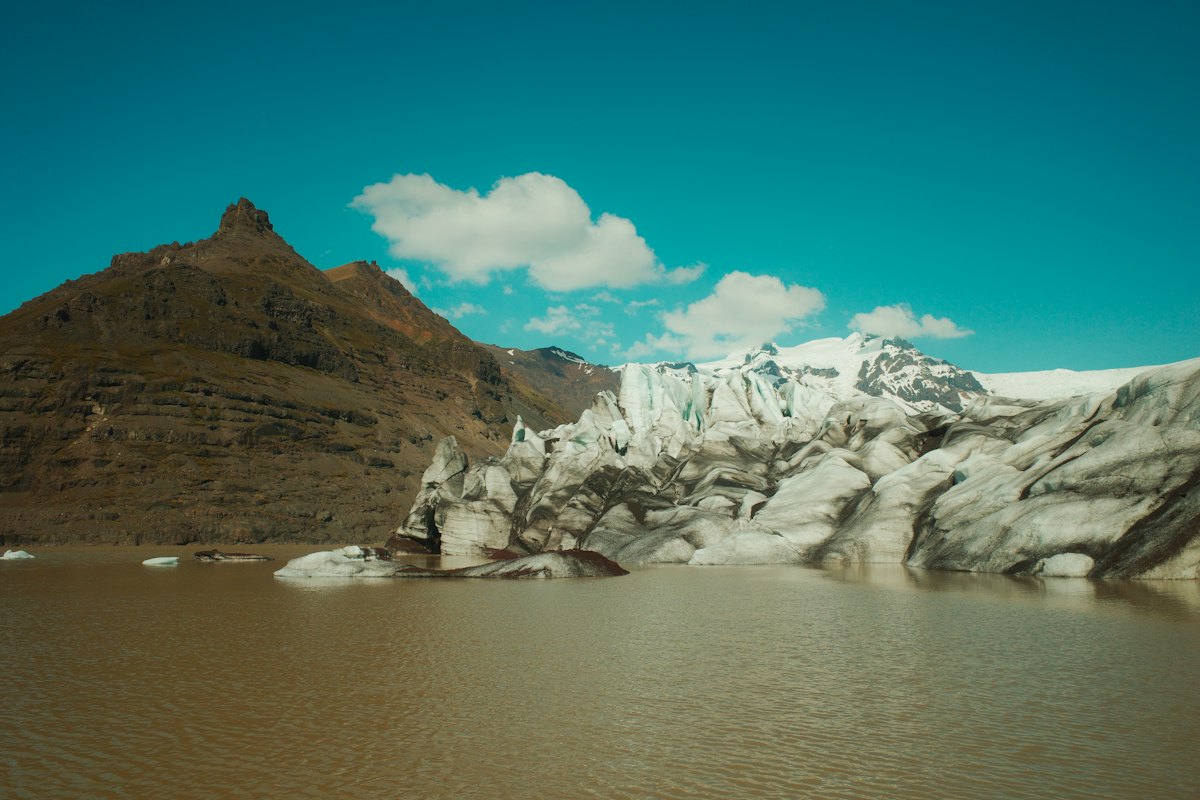
The opening shot of Twelve Visits lasts almost two minutes. It shows a wall of blue-white ice at the head of a valley, a river of meltwater running from its foot, and nothing else. No narration, no music, just wind and the occasional crack. By the time the film returns to that exact frame, ninety-four minutes later, the wall is gone. In its place is grey rock, a scatter of boulders and a new lake.
The documentary, which opens at the Ardle Picture House on Friday before a wider release across the region, is the work of a four-person crew who travelled to the same glacier on the first weekend of every month for a year. Its director, Saoirse Lindqvist, describes it as “a portrait of one place, painted slowly”. It is also one of the most quietly devastating films about a changing climate to have come out of the region in years.
The discipline of the fixed frame
The crew’s method is simple and rigorous. Each month, they set up cameras on the same three marked spots – one facing the glacier’s snout, one looking down the valley, one on the moraine above – and filmed at the same times of day. Over the year they gathered more than four hundred hours of footage. The result is a film that lets the landscape do most of the talking.
That restraint is its great strength. Where many climate documentaries pile on graphs and alarm, Twelve Visits trusts its audience to notice things: that the snow line is higher in the March sequence than anyone expects, that the meltwater river in August is louder than a motorway, that the small hut used by mountain guides has been moved twice by the end of the film because the ground beneath it has started to slump.
“We decided early on that we would not tell people what to feel. We would just keep going back, and keep pointing the camera at the same ice, and let the absence speak,” Lindqvist said in an interview before the film’s premiere.
Lindqvist, who previously made short films about fishing communities along the Selwyn coast, said the hardest part was resisting the urge to chase drama. A huge calving event in the summer, when a slab of ice the size of a block of flats collapsed into the lake, is shown in a single unbroken take from a distance, with no slow motion and no replay.
The people who stay
The film is not entirely without people. Woven through the months are brief conversations with those who live and work in the valley below the glacier: a hut warden, a hydrologist taking water samples, and a sheep farmer whose summer pasture is fed by the meltwater. The farmer, Aled Brannigan, is the closest thing the film has to a central character, and his laconic observations give it much of its warmth.
In one of the film’s best scenes, Brannigan stands at the edge of the new lake in November and points to where he used to walk on the ice as a boy. “Fifty years,” he says, and then, after a long pause, “Less, probably.” The camera stays on his face rather than the view.
The hydrologist, Freya Nakamura-Dunn, provides the few hard figures the film allows itself. Over the twelve months of filming, she tells the crew, the glacier’s snout retreated by just under ninety metres and its surface dropped by around four metres – a loss she describes as roughly double the yearly average of the previous decade.
Where it falls short
Not everything works. A middle section built around winter storms feels long, and a late sequence using time-lapse to compress the whole year into thirty seconds slightly undercuts the patience of everything that came before it. Some viewers may also wish the film said more about why the ice is going, rather than simply showing that it is.
But those are small complaints about a film of real seriousness. Twelve Visits asks for attention and repays it. It does not lecture, and it does not offer comfort. It simply returns, month after month, to a place that is disappearing, and invites us to look properly before it does.
Twelve Visits (PG, 94 minutes) is at the Ardle Picture House from Friday, with a question-and-answer session with the director after the Saturday evening screening. It will be shown at the Calder Film Theatre from the end of the month.