
A small museum by the station has tripled its visitors with a single, very strange show.
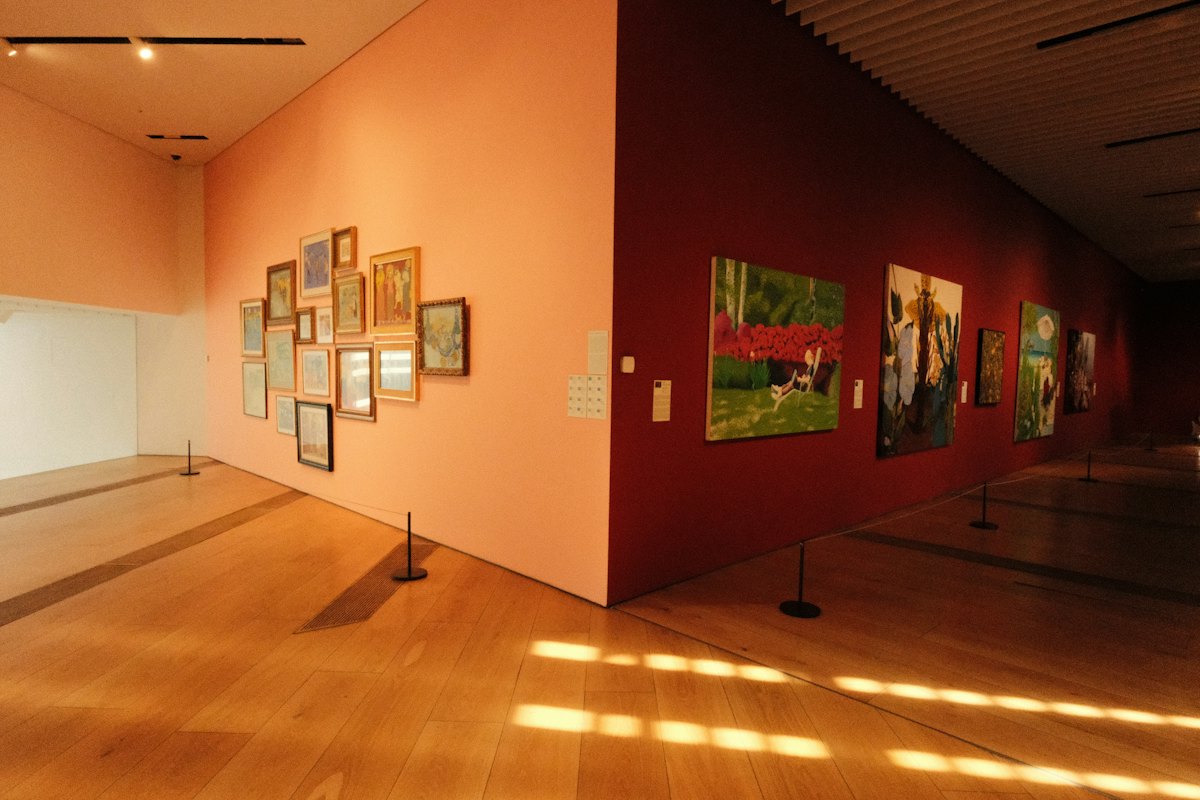
The Ardle Station Gallery occupies what used to be the parcels office, a long brick room with a sloping glass roof and a floor that still carries the scuff marks of trolleys. For most of its twenty-two years it has drawn a steady trickle of commuters killing time before the 17.42 to Calder, a few school parties and the occasional lost tourist. Last year it counted just under nine thousand visitors. Since the end of August it has counted more than twenty-seven thousand, and the queue on a Saturday morning now begins on the platform.
The reason is an exhibition called Left Behind, which consists entirely of objects abandoned on the region’s trains over six decades. There are 3,112 of them, laid out on trestle tables, hung from the ceiling on fishing line and stacked in glass cases that once held railway timetables. There is a wedding dress, still in its bag. There is a stuffed heron. There are forty-one single gloves arranged by colour, a set of false teeth in a biscuit tin and an accordion with a luggage label that reads, in faded pencil, “Please return to Doris, Harrow Moor”.
A cupboard nobody had opened
The collection came to light almost by accident. When the rail operator cleared a storeroom beneath the old signal box at Port Selwyn two winters ago, it found shelves of unclaimed property that had been kept, against every policy, by a succession of station staff who could not bring themselves to throw it away. The operator offered the lot to the gallery rather than to a skip. The gallery’s director, Imogen Haldane, drove over with a borrowed van and spent the next eighteen months cataloguing it with three volunteers.
“We thought we were doing a slightly melancholy little show about forgetfulness,” Imogen Haldane, the gallery’s director, said. “What we actually made was a show about people, and it turns out that is what everyone wants to see. They come in for the heron and they leave talking about their grandmother.”
Each object carries a small card with the date it was found and the train it was found on, and nothing else. There are no interpretive panels, no audio guide and no explanation of what any of it means. Visitors have filled four visitor books with their own guesses. One wall near the exit has become an unofficial noticeboard where people pin notes claiming items, or claiming to know whose they were. Staff say at least six objects have been positively identified by relatives, including the accordion, whose owner died in the 1990s and whose great-nephew travelled from Calder to stand in front of it.
The trains are fuller too
The effect has spilled well beyond the gallery’s doors. The rail operator says Saturday ticket sales to Ardle are up by around a third compared with the same period last year, and it has added two carriages to the mid-morning service from Calder. The café opposite the station has extended its hours. The town’s only bookshop has put a hand-written sign in its window directing visitors to the gallery, which is about forty paces away and impossible to miss.
Tobias Fenn, who runs the café, said he had served more scones in September than in the whole of the previous winter. “People get off the train, look at the gallery, look at the queue and come to me first,” he said. “Then they come back after and sit for an hour talking about the false teeth.” He has started keeping a box of his own lost property behind the counter, “in case they want it for the sequel”.
Not everyone is charmed. A handful of letters to the local paper have questioned whether a pile of other people’s belongings counts as art at all, and one councillor in Ardle asked, at a meeting last month, whether the owners of the objects had consented to being exhibited. The gallery says it took legal advice, removed anything that carried a full name and address, and has handed every identified item back to the family that asked for it.
What happens next
Left Behind was meant to close at the end of October. It has now been extended until the spring, and the gallery has applied for a modest grant to tour a selection of the objects to the hill towns, where many of them were presumably headed in the first place. Haldane is reluctant to talk about what might follow. The gallery has no permanent collection to speak of and a programme budget smaller than many school trips.
For now the room by the platform is busier than it has ever been, and the visitor books keep filling. The most recent entry, written in a child’s careful capitals beneath a drawing of the heron, reads simply: “I hope someone comes for him.”