


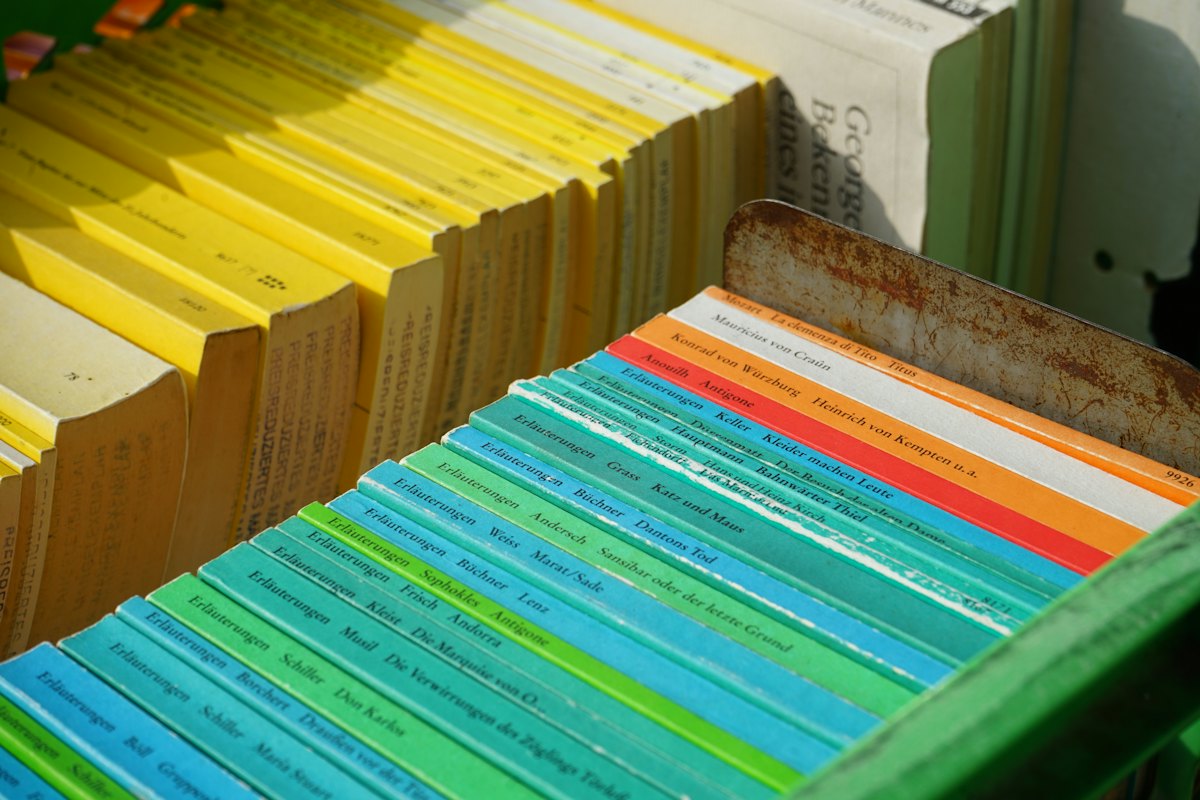
Forty years of type samples, sorted by shade, are going on public display.
The shelves in Walter Penhallow’s back bedroom begin with white. Not one white, but dozens: chalk, bone, cream, a cold blue-white he calls “hospital”, and a warm, slightly yellow sheet that he says came from a paper mill on the River Ardle that closed in the 1980s. From there the colours move slowly around the room, through greys and buffs into pinks, reds, oranges and greens, until they end at the door in a dense, glossy black.
Every item is a type sample: a sheet, booklet or card showing a typeface printed on a particular paper in a particular ink. Penhallow, now 81, collected them over four decades as a jobbing printer in Calder’s old town, first as an apprentice and later as owner of a two-press shop on Tanner’s Row. There are about 6,400 of them. Next spring, around a third will go on show at the City Gallery in an exhibition called Shade by Shade.
A habit that became a system
It began, he says, as untidiness. Specimen sheets arrived with every order of new type or paper and were thrown into a drawer. In 1979, faced with a drawer that would no longer close, he sorted the contents by colour because it was the quickest way he could think of to see what he had. He never changed the system.
The result is an archive that a historian would have arranged very differently. A wedding invitation from 1984 sits beside a railway timetable from the 1950s because both are printed on the same eggshell blue. A run of trade catalogues for agricultural machinery is broken up across five shelves according to the colour of their covers. Penhallow can find almost anything within a minute.
“People assume colour is the decoration. For a printer it is the first decision. You choose the paper, then the ink, and only then the letters. So I kept them in the order I thought about them,” Walter Penhallow said, pulling out a pale green folder of hymn sheets he printed for a chapel in Harrow.
From bedroom to gallery
The exhibition came about after Penhallow’s granddaughter posted photographs of the shelves online last year. Lucia Varga, a curator at the City Gallery, saw them and asked to visit. She spent three afternoons in the back bedroom and left, she says, convinced it was one of the most complete records of local printing she had seen.
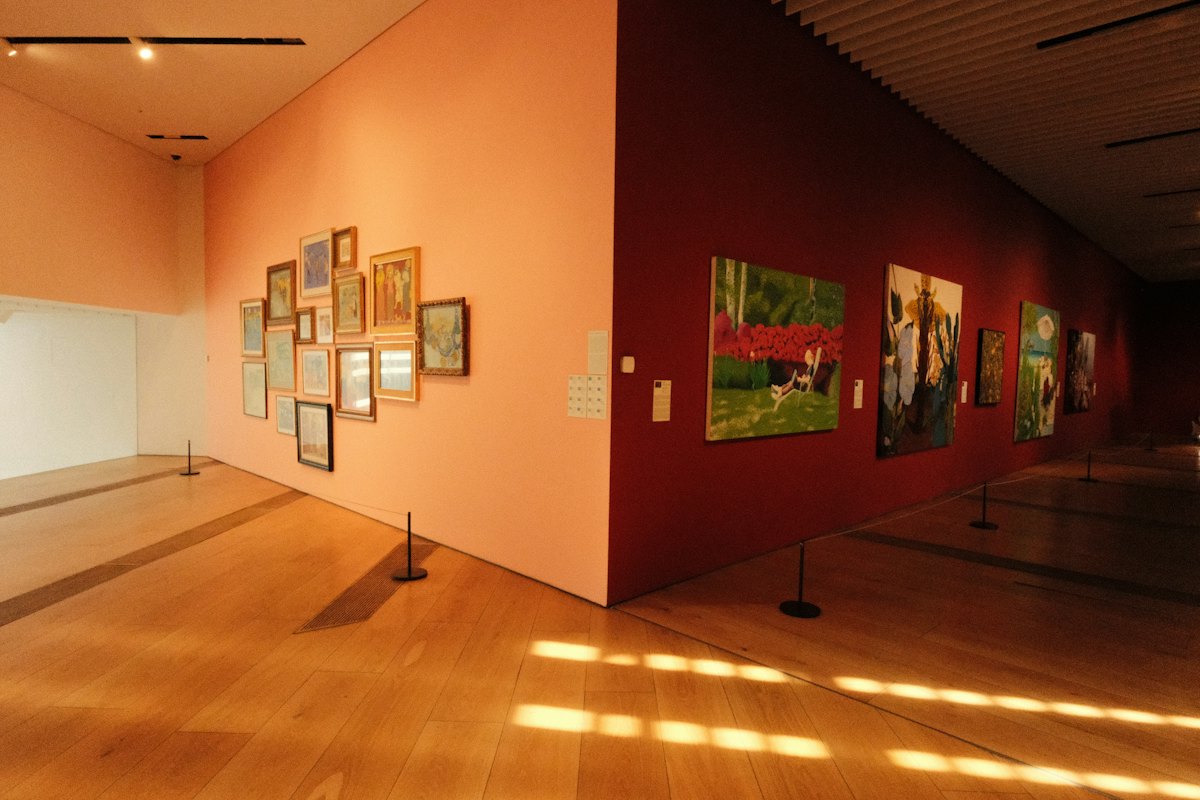
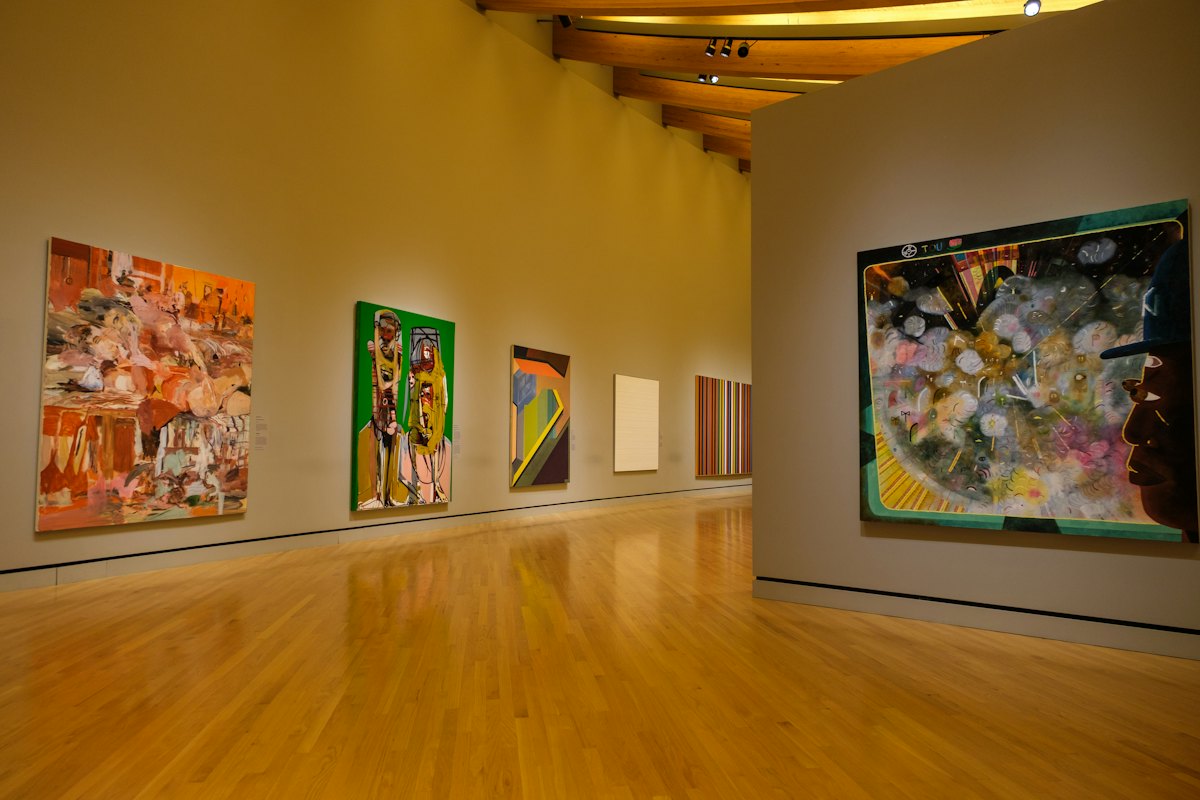
The gallery will reproduce the colour order in a long, curved room on its first floor, with samples mounted in shallow cases that follow the spectrum from white to black. Visitors will be able to handle a set of duplicates at a table near the entrance. A small working press, lent by a printing museum in Port Selwyn, will be used for demonstrations on Saturday afternoons.
Ms Varga said the exhibition was also a record of a trade that has largely gone. In the 1970s there were more than thirty small print shops in the old town. Today there are three. Many of the papers in Penhallow’s collection are no longer made, and several of the typefaces survive only as metal in his own cases or in museum stores.
Letting go, a little
Penhallow admits he found it hard to agree to the loan. The samples will be catalogued and photographed before they leave the house, and he has asked that the gallery return every sheet to its exact place on the shelves when the show closes. He has drawn a plan of the room, by hand, to make sure they do.
He still prints occasionally, on a small hand press in the garage, mostly birthday cards for grandchildren and the odd poster for the bowls club. Asked which shelf he is proudest of, he goes not to the bright reds or the rare metallic inks but to a run of grey card used for council notices in the 1960s. “Nobody looked at them,” he says. “That was the point. They were meant to be read, not admired. I like that they will be admired now, just for a while.”
Shade by Shade opens at the City Gallery in March and runs for twelve weeks. Entry is free.