Volunteers stripped the paint back by hand and found the original ceiling underneath.
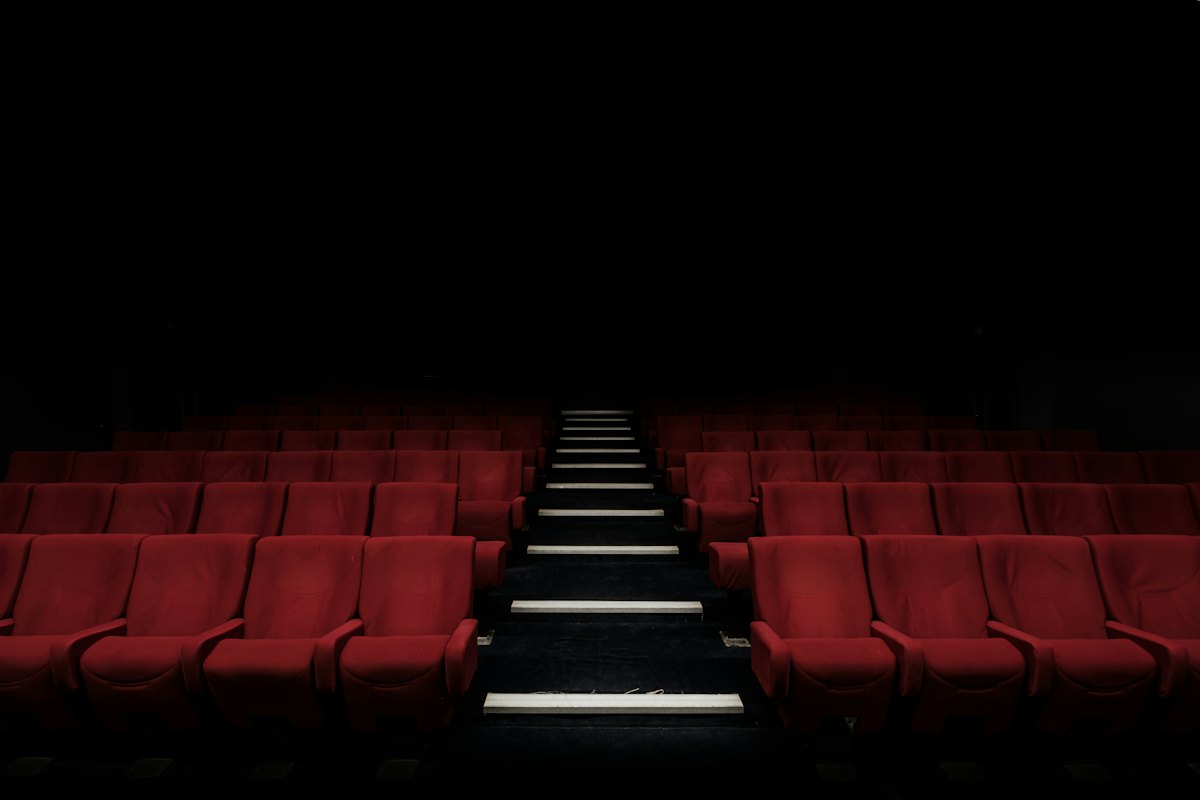
When the Regent on Mill Lane closed its doors in the spring of 1987, the last film it showed was a creaky war picture to an audience of fourteen. Last Friday, nearly four decades later, all 312 seats were taken for the first screening of its revived season, and the queue for returns stretched past the bus stop on the corner of the old town square.
The rescue of the Regent has been a slow affair. A trust formed by a handful of residents bought the lease from the city in 2023 for a nominal sum, on condition that the building be made safe within three years. What followed was mostly a matter of scaffolding, scrapers and patience.
A ceiling under the paint
The best-known story about the restoration is the ceiling. For decades the auditorium had been covered in a flat magnolia emulsion, applied, it is thought, during a hurried refit in the late 1960s. When volunteers began testing patches of the plaster last winter, they found gilded mouldings and a painted sky of pale blue and gold underneath – the original 1929 scheme, almost intact.
Removing the paint by machine would have damaged the detail, so the trust decided to strip it by hand. Over fourteen months, a rota of around sixty volunteers worked from a mobile platform with heat guns, soft brushes and dental picks. A conservator from the Calder School of Art supervised at weekends and trained newcomers on Tuesday evenings.
“We would do a square metre on a good night. Some evenings it was a hand’s width,” said Moira Kettering, a retired surveyor who coordinated the ceiling team and logged more than 400 hours on the platform herself. “You would uncover a star and the whole room would stop to look at it.”
Kettering said the team had kept a ledger of every section uncovered, with photographs, so that any gaps in the original painting could be matched rather than invented. Around a tenth of the sky had to be repainted where water had come in through a broken gutter, and the new work has been left very slightly paler so that it can be told apart from the old.
Programming the first season
The programme itself was put together by a committee of five, led by the trust’s volunteer director, Samir Oduya, who used to run a film society at the university. The season runs to twenty-four screenings over twelve weeks, mixing restored classics with recent independent titles and two silent films with live piano.
Every screening sold out within nine days of tickets going on sale in September. Oduya said the trust had expected strong interest for the opening night but had been surprised by demand for the weekday matinees, which were priced at four pounds and aimed at pensioners and parents with small children.
- Opening night: a 1930s musical restored from the original negative.
- Tuesday matinees: family films and a monthly “carers and babies” screening with the lights left half up.
- Two silent features accompanied by a pianist from the Ardle music school.
- A closing double bill chosen by public vote in the foyer.
The trust has resisted pressure to raise prices. Tickets for evening shows cost seven pounds, and fifty seats at every screening are held back for sale on the door, a decision Oduya defends as part of the point of the place. “If people can only get in by refreshing a website at nine in the morning, we have just built another cinema for people with fast broadband,” he said.
What still needs doing
The building is not finished. The balcony, which holds another 180 seats, remains closed until a new fire escape is installed, and the trust is still around £90,000 short of the cost. The original projection box is being used, but the projector is a modern digital machine on loan from a distributor; the trust hopes to raise money for a 35mm projector so it can show archive prints.
There is also the question of the café. The ground-floor shop next door, once the Regent’s sweet kiosk, has been empty since a betting office moved out last year. Trustees want to take it over and run it as a café with a second, smaller screen in the back room, though talks with the landlord have yet to produce a lease.
For now, the volunteers are mostly pleased to see the room full. On opening night, before the lights went down, someone in the stalls pointed upwards and the whole auditorium followed, looking up at a sky that had been hidden for more than half a century.