


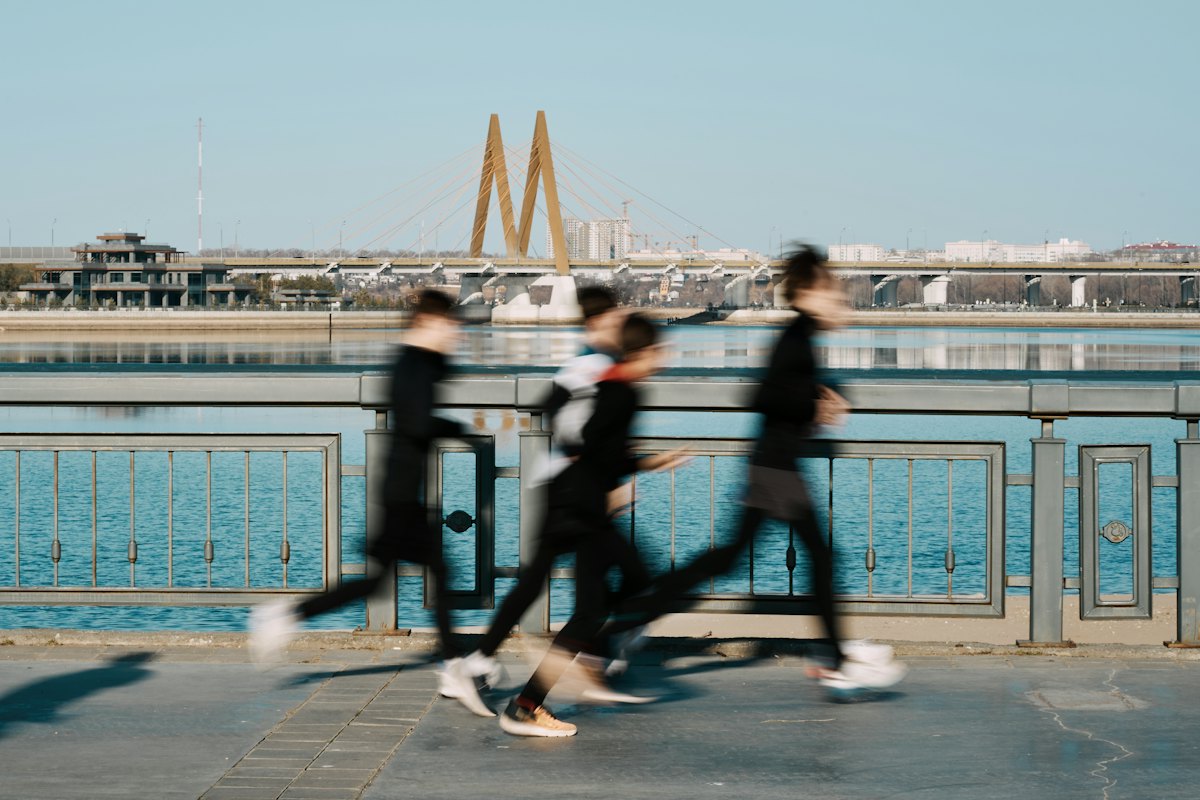
The new route avoids the bridge works and adds a flat finish along the quay.
The Harbour Half Marathon will start from the Customs House on the western quay next spring rather than from its traditional line on the Ardle Bridge, after organisers confirmed a revised route to avoid eighteen months of repair works on the crossing. The change also brings a new finish: a flat final mile along the length of the quay, replacing the short, steep climb up Chapel Hill that has decided many races in the past.
The race, which last year attracted 6,200 finishers, takes place on the third Sunday of April. Registration for the new route opens on 1 December, and organisers said they expected entries to sell out faster than usual because of interest in what is likely to be a quicker course.
How the route has changed
Under the old layout, runners gathered on the bridge and its approach roads, crossed into the old town in the first mile and headed out along the canal towpath before looping back through the harbour streets. With one lane of the bridge closed and scaffolding along both parapets, the safety team decided it was impossible to fit several thousand runners onto the deck.
The new start, on the wide forecourt in front of the Customs House, takes runners south along Dock Road and onto the canal towpath at the second mile, rather than the first. The middle section, through the parkland around the reservoir and back along the towpath, is broadly unchanged. Instead of crossing the river again and climbing Chapel Hill, runners will now cut down Ropewalk Lane and finish with a straight run of roughly 1,600 metres along the quay to the harbour master’s office.
- Start: Customs House forecourt, western quay, 9am
- Miles 2 to 6: canal towpath, outbound
- Miles 6 to 10: reservoir park loop and towpath return
- Miles 10 to 12: Ropewalk Lane and harbour streets
- Final mile: flat finish along the quay
Faster times ahead?
The course has been measured and certified, which means times run on it will count for qualifying purposes. Organisers estimate the total climb has fallen from around 85 metres to about 40, almost all of it in the reservoir section. Local clubs expect the course record of 1 hour 3 minutes and 41 seconds, set four years ago, to come under pressure.
“Chapel Hill was a lovely piece of theatre, but it cost the elite runners at least half a minute. A flat mile on the quay with the crowd on both sides could make this one of the quickest halves in the region,” said Gemma Thorne, head coach at Harbour Harriers, who has run the race eleven times.
Thorne added that some club runners would miss the climb. “It was the bit everyone talked about afterwards,” she said. “But I suspect they will forgive the organisers when they see their finishing times.”
What it means for spectators and residents
Road closures will be shorter in the old town but longer around the harbour, with Dock Road closed from 7am until 1pm. Businesses on the quay, several of which have complained in the past that the finish was hidden up a side street, have welcomed the change. The harbourside cafés plan to open early on race morning, and a family fun run of two kilometres will take place on the quay after the main race.
Race director Samuel Achebe said the team had consulted residents along the new stretch of the route and would publish a full list of road closures in February. He said the start would return to the bridge once repairs were complete, but that the quayside finish was likely to stay. “Runners asked for it, spectators asked for it, and the harbour looks wonderful on a spring morning,” he said. “We should have done it years ago.”