Free courts on weekday afternoons for any pupil who turns up.
For most of its 112-year history, the Harrow Lawn Tennis Club was the sort of place you had to know someone to join. Membership required two sponsors, a joining fee of several hundred pounds and, until the 1990s, a dress code that banned coloured clothing. From Monday, any school pupil in the region will be able to walk through its gates between half past three and six o’clock on weekday afternoons, pick up a racket from a rack by the clubhouse door and play on one of its eight courts for nothing.
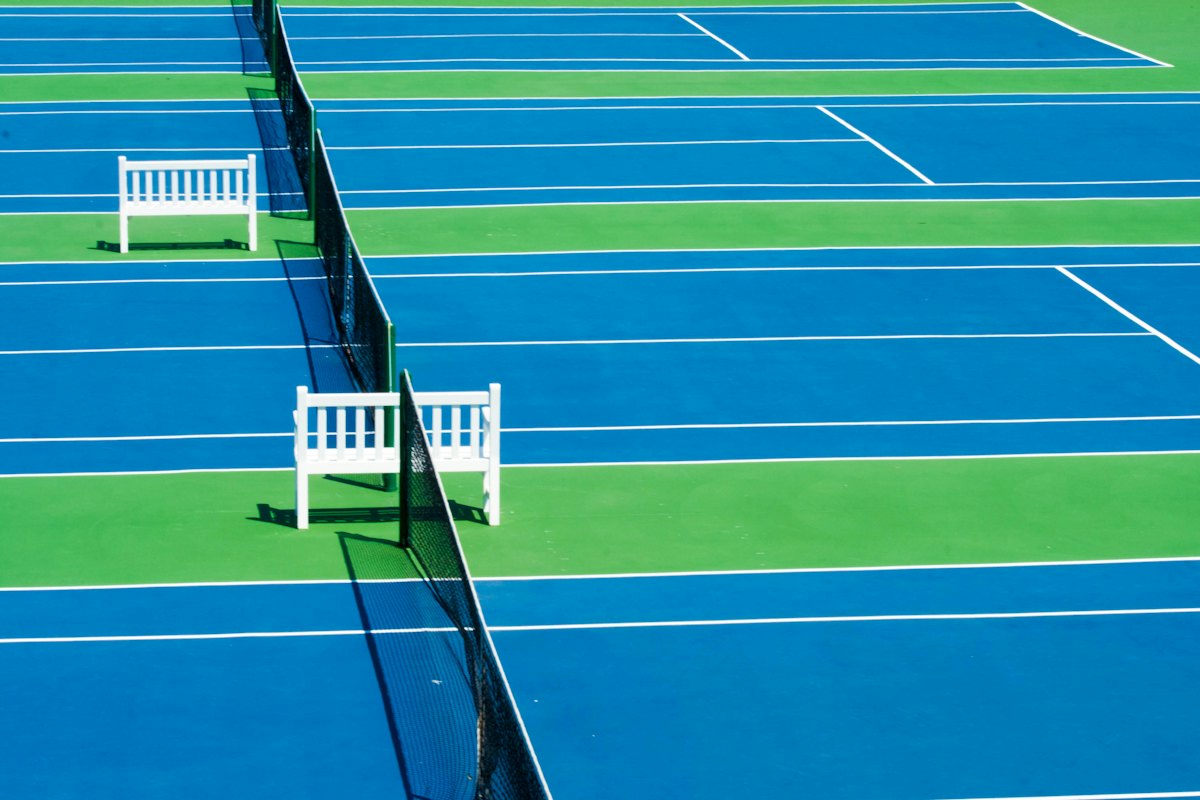
The scheme, which the club’s members approved by a large majority at a special general meeting last month, opens four of the club’s courts – two hard and two artificial grass – to any child of school age who turns up during the weekday window. No booking is required, and no membership or registration is needed beyond writing a first name in a book at the gate. Rackets and balls are provided, and a qualified coach will be on site on Tuesdays and Thursdays.
Why the club changed course
The decision follows several difficult years. Membership fell from around 600 a decade ago to just over 350 last year, and the average age of members rose above 55. The courts were often empty on weekday afternoons, and the committee had begun discussing whether to sell two of them to a developer to fund repairs to the clubhouse roof.
“We could have sold off part of the club and carried on shrinking. Instead we asked ourselves who ought to be using these courts, and the answer was the children walking past our fence every afternoon on their way home.”
That was Marjorie Thwaite, the club’s chair and a member for more than forty years, explaining the change at a launch event attended by pupils from four local primary schools. She said the committee had been inspired partly by her own grandchildren, who had never played tennis because their school had no courts and the nearest public ones were closed for resurfacing.
The club has received a grant of £24,000 from the regional sports council to cover coaching, equipment and the cost of extending the floodlights so that courts can be used after dark in winter. Several local businesses have donated rackets, and a sports shop in Calder has promised to replace any that are broken.
Making it work on the ground
The practical details have been carefully thought through. Pupils of primary age must be accompanied by an adult, though the adult does not need to play. Secondary pupils can come alone, provided they sign in. Courts will be allocated on a first-come basis, with a rule that players must give way after forty minutes if others are waiting. The clubhouse toilets and a water fountain will be open, and volunteers from among the existing members have signed up to supervise each session.
Schools have responded quickly. The headteacher of Harrow Moor Primary, Kwame Asante-Lowe, said his school had no outdoor space suitable for tennis and that the club was a short walk from the gates. He plans to send a group of Year 5 pupils every Wednesday as part of an after-school club, and has asked whether the scheme could be extended to the summer holidays.
Coaches see it as a way to find talent that would otherwise be missed. Ella Rourke, who runs the club’s junior programme and once played at county level, said that most of the region’s promising young players came from families who already belonged to tennis clubs. Opening the gates, she said, would show whether that was because of ability or simply access.
What comes next
The scheme will run as a trial until the end of the summer term, with a review in July. If demand is high, the club intends to add courts at weekends and to introduce a reduced junior membership of £20 a year for children who want to enter competitions. The regional sports council has already asked other clubs in the area, including the bowls and croquet clubs in the old town, whether they would consider similar arrangements.
On the first afternoon, the sign-in book was not needed until ten to four, when a boy of about ten arrived in his school uniform, asked politely if it was really free, and was handed a racket. Within the hour, all four courts were full.