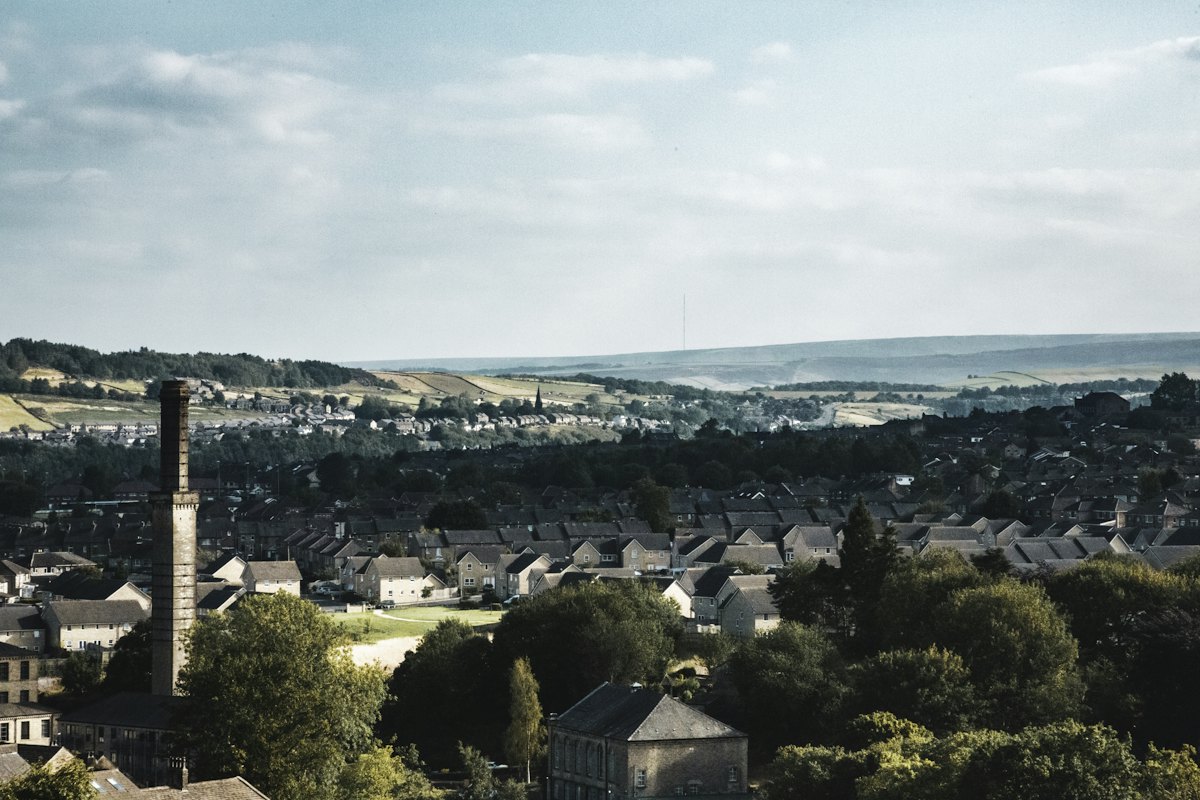

Every postal round in the old town is now driven on battery power.
The last diesel van left the old town delivery office on Saddler’s Row for the final time on Friday morning, carrying letters and parcels to the streets around the cathedral. From Monday, all 46 postal rounds served from the office are being driven by battery-electric vans, making the old town the first part of Calder where every round is emission-free at the tailpipe.
The switch has taken just over eighteen months and is part of a wider plan by the postal operator to electrify its fleet across the region by the end of the decade. The old town was chosen first because its rounds are short, mostly under twenty miles a day, and because the narrow streets around the castle and the cathedral have some of the worst air quality in the city. Monitoring stations on Castle Street regularly recorded nitrogen dioxide levels above the legal limit until two years ago.
Charging behind the sorting office
The vans are charged overnight in the yard behind the sorting office, where engineers have installed 48 charging points and upgraded the building’s electricity supply. A new substation was needed, which caused several months of delay last winter while the network operator dug up part of the street. The office’s roof now carries 220 solar panels, which supply a portion of the daytime power for sorting machines and lighting and top up a small battery that helps smooth demand when the vans plug in.
Each van has a real-world range of about 110 miles on a full charge, according to the operator, comfortably more than any round in the old town needs, even in cold weather when batteries lose efficiency. Drivers start their shifts at about 7am with a fully charged vehicle and return in the early afternoon with typically more than half the battery remaining.
“The first week, a lot of us kept looking at the battery gauge every five minutes,” said Shona Brierley, a postwoman who has delivered in the old town for nineteen years. “Now nobody thinks about it. It is quieter, it is smoother, and you do not stink of diesel when you get home. The only complaint is that people do not hear you coming, so you get a few surprised dogs.”
The numbers behind the switch
The operator estimates that the electric fleet will save about 180 tonnes of carbon dioxide a year compared with the diesel vans it replaces, and cut fuel and maintenance costs by about a third. Electric vans have far fewer moving parts and need less frequent servicing, though they are more expensive to buy. The company would not say how much it had spent on the old town project, but industry estimates suggest the vans cost around £10,000 more each than diesel equivalents.
For the city, the more immediate benefit is cleaner air. Gareth Lomas, who leads the air quality team at City Hall, said delivery vehicles were among the biggest contributors to pollution in the old town because they made frequent stops with engines idling. “Taking forty-odd diesel vans off these streets every morning is a real and measurable change,” he said. “If the parcel firms follow, we could see a dramatic difference within a few years.”
Some of those firms are already moving. Two courier companies have begun trials of electric cargo bikes for deliveries within the castle walls, and the council is considering a zero-emission delivery zone around the cathedral by 2029.
Remaining hurdles
The switch has not been entirely smooth. Two vans broke down in the first month with software faults and had to be towed back to the depot, and drivers said the cab heaters drained the battery faster than expected on the coldest mornings last winter. The union representing postal workers welcomed the change but said the operator needed to make sure drivers were trained properly and that enough spare vehicles were on hand.
Extending the scheme beyond the old town will be harder. Rounds in the hill villages and around Harrow Moor can exceed eighty miles a day on steep roads, and some rural delivery offices have no connection strong enough for dozens of chargers. The operator said those areas would be converted last, once longer-range vehicles become cheaper. For now, on the cobbled lanes around the cathedral, the morning round arrives almost silently, and the only sound is the snap of a letterbox.