A full wiring diagram of a tiny brain is helping explain how we remember.
A fruit fly’s brain is about the size of a poppy seed and contains something over a hundred thousand neurons. For the first time, researchers have a near-complete map of how every one of those cells connects to the others – and scientists in Calder are using it to answer a question that has puzzled neuroscience for decades: where, physically, does a memory live?
The map, known as a connectome, was assembled by an international consortium over several years. Thin slices of a single fly brain were imaged with an electron microscope, and the resulting images – millions of them – were stitched together and traced, partly by machine-learning software and partly by hundreds of human proofreaders who checked each branch by hand. The finished diagram records roughly fifty million synapses, the junctions where one neuron passes a signal to the next.
At the University of Calder’s neuroscience institute, a team has spent the past eighteen months focusing on one part of that diagram: the mushroom body, a pair of structures that sit near the top of the fly’s brain and have long been known to be involved in learning smells.
A circuit for good and bad smells
Flies can be trained, much as Pavlov trained his dogs. Expose a fly to a particular odour while giving it a mild shock, and it will learn to avoid that smell. Pair the odour with sugar, and it will seek it out. The question has always been what changes inside the brain to make that happen.
The connectome shows that smells arrive in the mushroom body through around two thousand cells called Kenyon cells, each of which responds to a small, sparse combination of odours. Those cells connect to a much smaller group of output neurons – only a few dozen – which effectively vote on whether the fly should approach or turn away. Between them sit dopamine neurons, which carry signals of reward or punishment.
“What the wiring diagram tells you is that learning in this circuit is about adjusting the strength of very specific connections. The dopamine neurons don’t touch everything. Each one talks to one compartment, and each compartment has its own job,” said Dr Ingrid Solano-Marsh, who leads the Calder group.
Dr Solano-Marsh, a senior lecturer who moved to Calder from a laboratory abroad four years ago, said her team had used the map to predict which connections should weaken when a fly learns to avoid an odour. They then tested those predictions in live flies by switching individual dopamine neurons on and off with light, a technique known as optogenetics. In seventeen of twenty compartments, the behaviour matched what the wiring suggested.
Short-term and long-term
One of the more surprising findings concerns the difference between memories that fade within hours and those that last for days. Flies trained once tend to forget within a day; flies trained several times, with rest periods in between, remember for a week or more – a large fraction of their short lives.
The connectome revealed a set of feedback loops in which output neurons connect back to the dopamine neurons that taught them. The Calder team believes these loops act as a kind of rehearsal mechanism, allowing a memory to be replayed and consolidated without the fly encountering the smell again. When the researchers silenced the loops, long-term memory failed while short-term learning was untouched.
Tomasz Eberle, a doctoral student on the project, said the work had changed how he thought about the field. “For years we had a list of parts. Now we have the circuit board. You can look at it and say, if this is true, then that wire must exist – and then you go and check.”
From flies to people
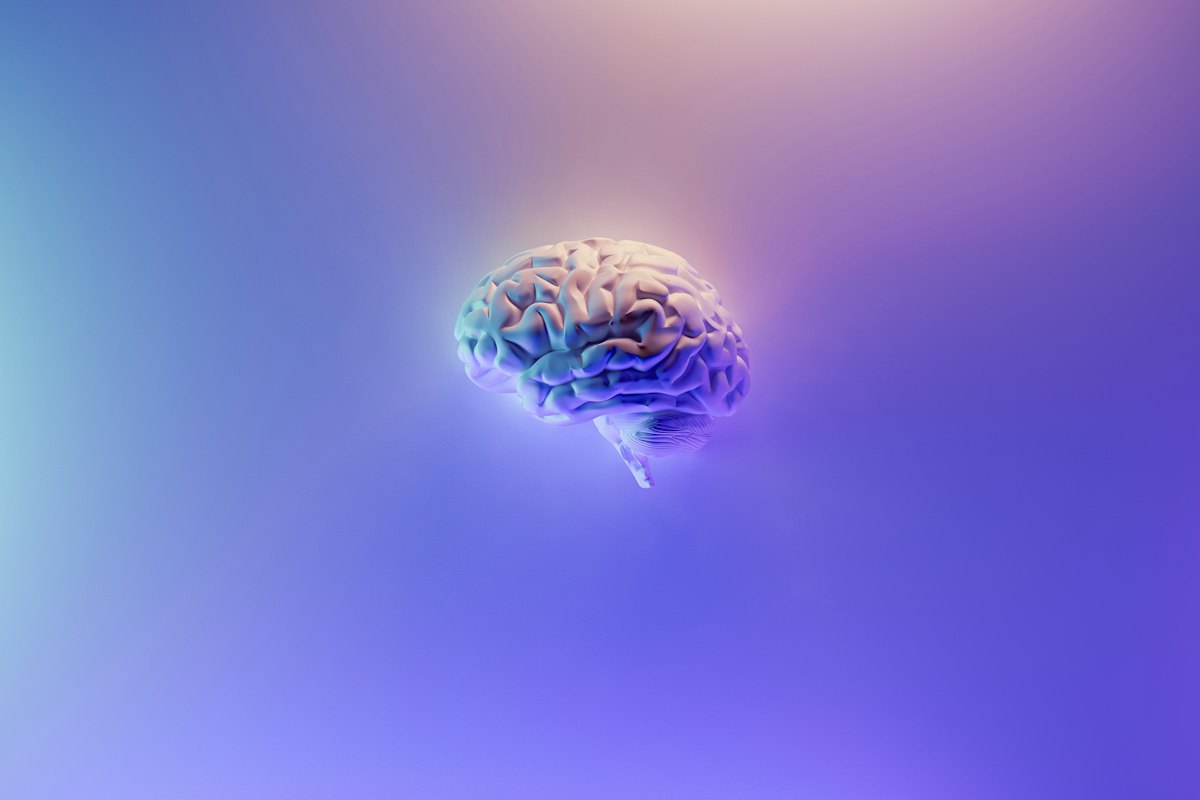
The obvious caution is that a fly is not a person. The human brain has around eighty-six billion neurons, and a comparable map of it remains far beyond current technology; even a complete mouse connectome is thought to be years away. Researchers are also careful to note that a wiring diagram shows which cells are connected, not precisely how strongly or how the chemistry varies from moment to moment.
Yet the principles appear to carry over. The arrangement of sparse sensory cells feeding into a small number of decision-making neurons, with reward signals tuning the connections between them, resembles circuits found in the mammalian cerebellum and in parts of the brain associated with habit formation. Dr Solano-Marsh said that understanding how a small system does it properly could help researchers know what to look for in a larger one.
The team’s next step is to compare connectomes from several flies, including some raised in different environments, to see how much the wiring varies between individuals. That work, funded by a three-year grant awarded last spring, will begin in the new year. The group’s current findings have been published in a peer-reviewed journal and the data released openly for other laboratories to use.