Judges will decide whether the emergency rules outlived their purpose.
Lawyers for a coalition of shopkeepers, night-shift workers and civil liberties campaigners will ask the High Court in Vardenmark this week to strike down the night-time curfew that has applied in three of the country’s largest cities for almost fourteen months. The hearing, scheduled to last three days, is the first time the country’s senior judges have been asked to rule on whether emergency powers can lawfully be extended long after the crisis that justified them.
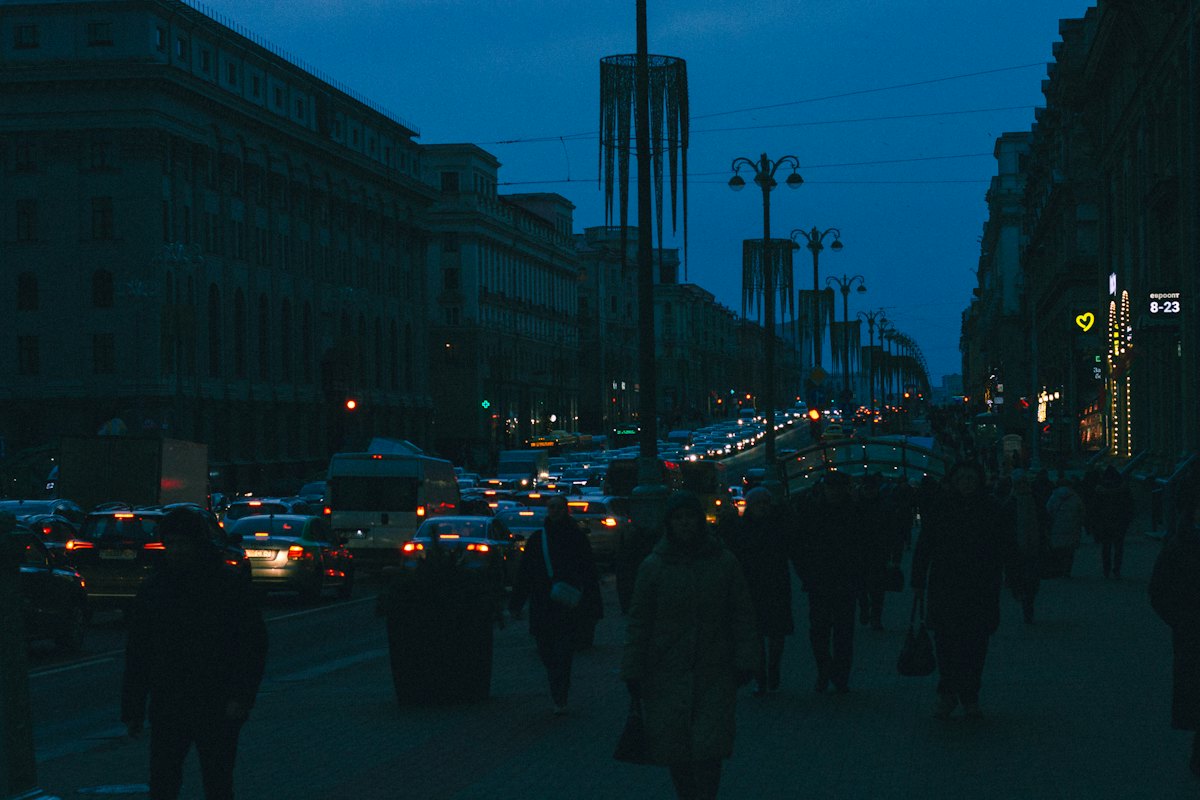
The curfew was introduced in the port city of Lessingen and the inland cities of Hollbrecht and Marrow after a week of rioting in the late summer of last year, which left two people dead and hundreds of shops damaged. Under the rules, nobody may be on the street between midnight and five in the morning without a work permit, a medical reason or a pass issued by the police. Bars and restaurants must close by eleven.
The government has renewed the order four times, most recently in September, each time for ninety days. Ministers argue that the calm in the three cities is evidence the measure is working, and that lifting it now would risk a return to violence.
The legal argument
The challenge rests on a narrow but important point. Vardenmark’s constitution allows the government to impose restrictions on movement during a declared emergency, but requires that such measures be “strictly necessary and proportionate to the danger”. The claimants say that test can no longer be met. Police figures, which they will put before the court, show that recorded public-order offences in the three cities returned to their pre-riot levels within six weeks of the curfew beginning and have remained there since.
“Nobody disputes that the government had to act last summer. The question is whether it can keep doing so indefinitely, without coming back to parliament and without showing that the danger still exists. Emergency powers that never end are not emergency powers,” said Annelie Brauer-Koss, the barrister leading the claimants’ case.
Ms Brauer-Koss told reporters outside the court on Monday that her clients were not seeking compensation, only a declaration that the latest renewal was unlawful. Government lawyers are expected to argue that the decision is one for ministers, informed by intelligence that cannot be disclosed publicly, and that judges should be cautious about second-guessing assessments of public safety.
Life after midnight
Outside the courtroom, the curfew has reshaped the rhythm of the cities. In Lessingen’s harbour district, where dozens of bars once stayed open until the early hours, owners say turnover has fallen by between a third and a half. A federation representing late-night venues estimates that around 260 businesses across the three cities have closed since the restrictions began, though it acknowledges that rising costs played a part.
Shift workers say the permit system has added a layer of anxiety to their nights. Jurek Halvorsen, a hospital porter in Hollbrecht who is one of the named claimants, said he had been stopped and questioned eleven times on his way home since the rules began, twice despite carrying his permit. “I understand why they did it at the start,” he said. “But I am not a threat. I am going home to sleep.”
Supporters of the curfew are not hard to find, particularly in the neighbourhoods worst hit by last year’s violence. Residents’ groups in Marrow’s eastern districts have submitted statements to the court describing quieter nights, fewer break-ins and children able to sleep without sirens.
What the judges could decide
The court has several options. It could uphold the latest renewal entirely, quash it with immediate effect, or – as some legal observers think most likely – rule that future extensions must be approved by a vote in parliament rather than by ministerial order. Such a ruling would leave the curfew in place for now but sharply raise the political cost of renewing it.
A judgment is not expected for several weeks. The current order expires in mid-December, and the interior ministry has not said whether it intends to seek a fifth extension. Opposition parties have tabled a motion calling for a phased lifting of the restrictions, beginning with Hollbrecht, which saw the least disorder last year.
Whatever the outcome, the case is being watched closely by neighbouring states, several of which introduced their own emergency measures in recent years and have yet to fully withdraw them.