One head teacher’s recipe book has spread to forty kitchens.
At ten past twelve on a Wednesday at Ardle Valley Primary, the queue for lunch stretches out of the hall and into the corridor. Nobody is complaining. The smell drifting from the kitchen – onions, smoked paprika, bread just out of the oven – is the kind that makes even reluctant eaters hurry. Today it is chickpea and sweet potato stew with a flatbread, and the head teacher is serving it herself.
Four years ago Morag Ellison, head of Ardle Valley since 2019, decided the school’s lunches were part of the reason too many children were missing school. Attendance had dropped below 91 per cent, and a survey of families found that a significant number of children were arriving hungry and leaving the canteen with full plates of food untouched. She persuaded the governors to bring cooking back in-house, hired a cook from a local restaurant, and began writing down every recipe that worked.
That handwritten folder has since become The Ardle Valley Canteen Book, a spiral-bound collection of 60 recipes, each costed for a hundred portions and tested on children. It is now used in forty school kitchens across Calder, Harrow and Selwyn, and City Hall’s education office has begun distributing it to every primary school in the city.
From empty plates to full classrooms
The effect on attendance at Ardle Valley has been striking. Last year the school recorded attendance of 95.8 per cent, among the highest in the district for a school with similar levels of deprivation. Ellison is careful not to claim that lunch alone is responsible. The school also introduced a breakfast club and a walking bus. But she believes food was the foundation.
“Children come to school for lots of reasons, and one of them is that it is a place where good things happen,” said Morag Ellison. “A hot, proper lunch that they actually want to eat is one of those good things. You would be amazed how many parents tell me their child wouldn’t miss Wednesday because it’s stew day.”
A study by researchers at Calder University, looking at fourteen schools that adopted the book in its first year, found that unauthorised absences fell by an average of 11 per cent compared with similar schools that did not. The researchers cautioned that the schools were self-selecting and that further work was needed, but described the results as “unusually consistent”.
Inside the book
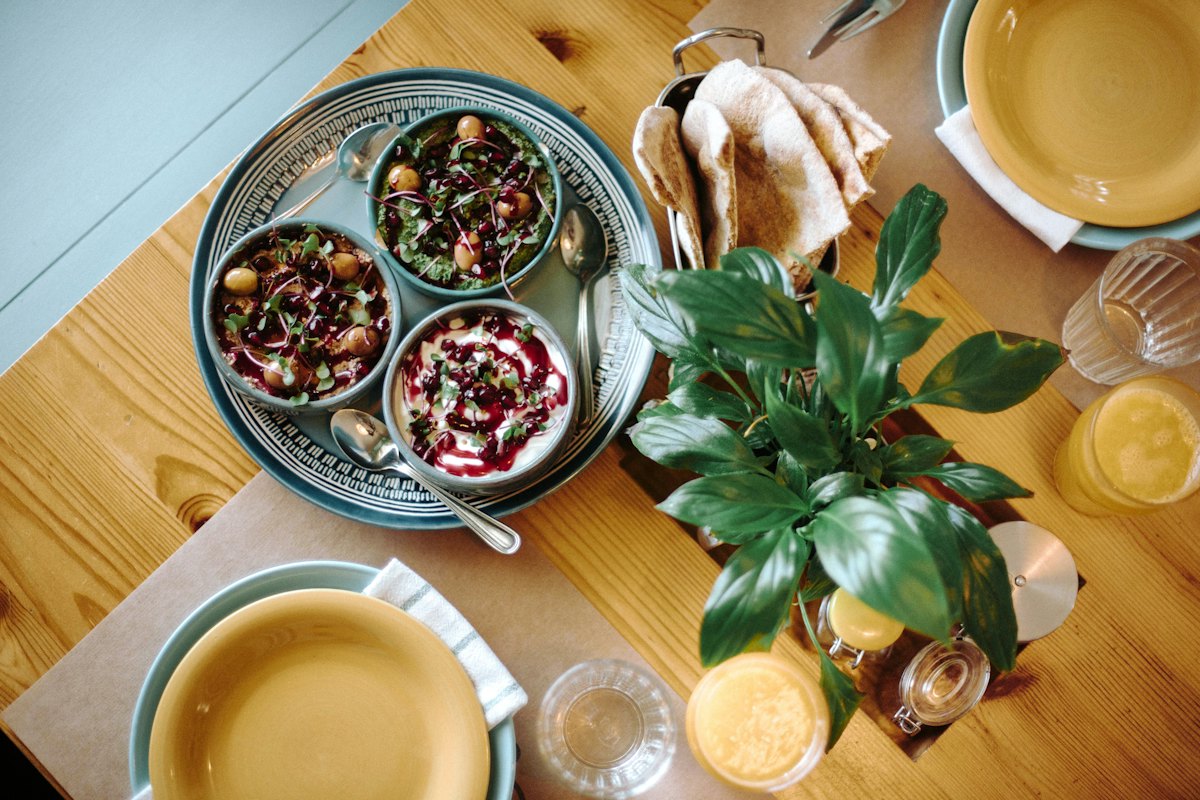
The recipes are simple, cheap and built around a handful of principles: plenty of vegetables hidden in sauces, bread baked on site, very little that comes from a packet, and food that children can recognise. Cook Faisal Dorrington, who has run the Ardle Valley kitchen since the start, says the hardest part was learning to scale up flavour, not quantity. The chickpea stew served on Wednesday is one of the most popular. Scaled down for a family of four, it goes like this:
- 1 large onion and 2 cloves of garlic, finely chopped
- 2 medium sweet potatoes, peeled and cut into 2cm cubes
- 1 tin (400g) chickpeas, drained
- 1 tin (400g) chopped tomatoes
- 1 tsp smoked paprika and 1 tsp ground cumin
- 300ml vegetable stock and a handful of spinach
Soften the onion in a tablespoon of oil over a medium heat for eight minutes, add the garlic and spices and cook for one minute more. Add the sweet potato, tomatoes and stock, bring to a simmer and cook gently for twenty minutes until the potato is tender. Stir in the chickpeas for the last five minutes and the spinach for the final one, then season lightly. Serve with flatbread or rice. Dorrington says the trick for children is to cook the onions properly: “Raw onion is the enemy. Sweet onion is the friend.”
Spreading kitchen to kitchen
The book’s spread has been largely word of mouth. Head teachers visited Ardle Valley, ate in the hall, and asked for copies. Ellison began running half-day training sessions for school cooks on Friday afternoons, and Dorrington now visits two new kitchens a month.
The main obstacle for many schools is not recipes but facilities. Around a third of primaries in the city receive meals cooked off-site and have only warming equipment. City Hall has set aside £1.4m over three years to refit school kitchens, with priority for schools in areas of low attendance. A second edition, with twenty new recipes contributed by cooks from other schools, will be published in the spring. Ellison says the most requested addition is a decent vegetarian lasagne. “We are working on it,” she said. “The children are very strict judges.”